
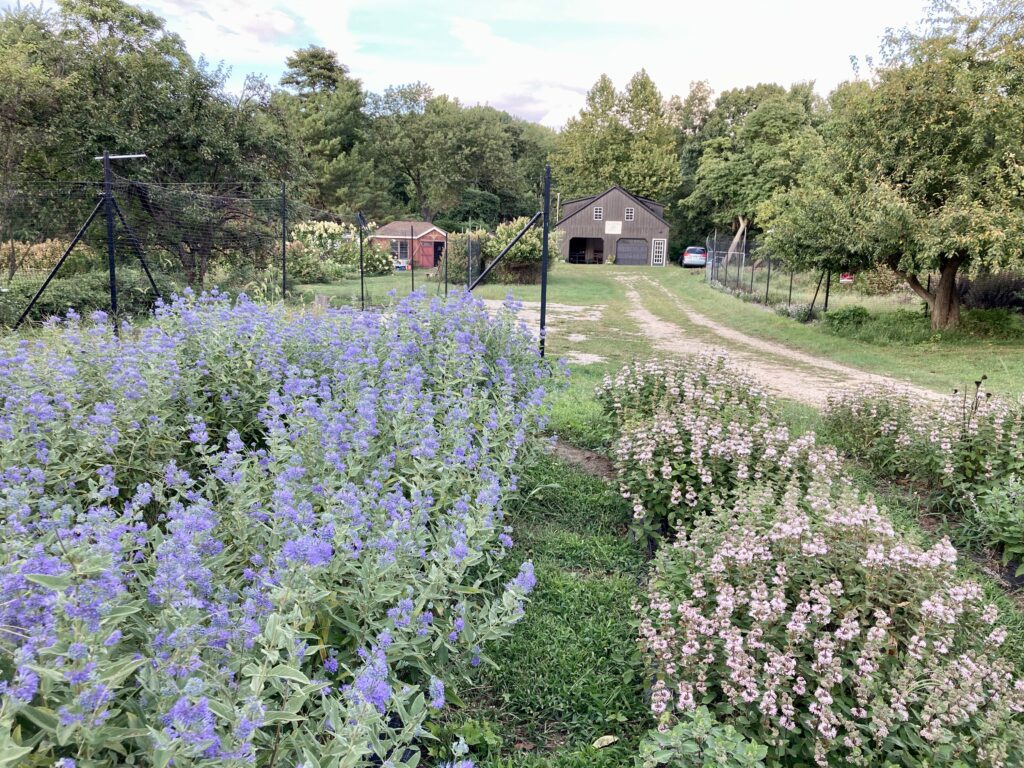
For years, florists have heard the same reasons not to buy local flowers: There aren’t enough growers. They won’t have everything you need. Sourcing from them is too hard.
And historically? Some of that was true. But something has been quietly—and not so quietly—growing in fields across the U.S.
According to the USDA, cut flowers are now one of the fastest-expanding niches in American agriculture. Between 2017 and 2022, the number of U.S. farms growing cut flowers and florist greens increased by 59% and now covers more than 35,000 acres!
The Mid-Atlantic is experiencing the same groundswell. Between 2017 and 2022, the number of farms reporting cut-flower or florist-green production in in the region also grew by 59%.
Here in Pennsylvania specifically, the USDA counted 472 farms growing cut flowers in some capacity in 2022—from dedicated flower farms to diversified farms and orchards adding a few rows of sunflowers and zinnias. Two years later, 145 of the state’s more established floriculture operations—those with at least $10,000 in cut flower sales—reported a combined $30.9 million in annual cut-flower sales.
These farms are making an impressive amount of economic activity happen on relatively little land. Based on USDA figures, cut flowers generated an estimated average of about $21,700 per acre in 2022. For perspective, the national averages were roughly $1,100–$1,200 per acre for corn and $3,800 per acre for vegetables. These are gross averages, of course, and the labor and overhead involved vary enormously between farming systems. But the comparison helps illustrate how much opportunity can grow from a small cut flower farm.
And there is plenty of opportunity still ahead! In 2022, American farms produced approximately $763 million in cut flowers and greens. That same year, the U.S. imported $1.9 billion in cut flowers—nearly two and a half times the value of everything grown here at home. Capturing even 10% of those imports with American-grown stems would represent another $190 million in demand for domestic farms. Millions that would go directly back into our local economies and local land conservation!
PFG growers see this demand. They are planting more, building tunnels, improving postharvest systems, experimenting with new varieties and working together through PFG to make local sourcing easier and more reliable.
We aren’t claiming that every imported flower can—or should—disappear tomorrow. Seasonality, climate, price and production capacity are real considerations. But the old idea that local flower farming is too small to matter is increasingly out of date.
The farms are here. More are coming. And every time a florist chooses locally grown stems, it gives those growers the confidence—and the cash flow—to plant a little more for next season. That’s how an industry grows: one farm, one florist and one bunch at a time. Thank you for helping us engender real change!