
Cover image credit: @happy_aiccidents
Recently during pick-ups at the hub, we’ve been hearing a few different florists mention receiving AI-generated inspiration images from potential wedding clients. The general sentiment seems to be that these images are a bit ridiculous with shapes and sizes that aren’t even close to real. One florist in particular was stressing about recreating a staircase floral install that had been inspired by AI (she nailed it, btw!).
So that got us thinking about how it’s better to get ahead of the curve and help you learn how to use AI yourself for client education and inspiration. Full disclosure here…ChatGPT5 helped write this article because, well, this is all new to us too!
How Florists Can Use AI to Better Serve Clients
Artificial Intelligence isn’t just for tech companies—it’s quickly becoming a helpful tool for flower pros too. From creating (relatively) realistic flower visuals to drafting customer proposals more efficiently, AI can save you time while helping you better connect with clients. Here are a few ways you can start experimenting with AI.
1. Generate Flower Images for Proposals
When you’re working with local, seasonal flowers, you’re frequently putting together inspiration images and speaking with clients when the flowers you plan to use are not actually in season. Or perhaps you want to show them a design idea/sample without spending the money on fresh product. AI image generation tools like DALL·E (via ChatGPT) or the AI assist tools in Adobe Photoshop can create surprisingly realistic flower images in just a minute or two.
The trick is to be good at giving AI the right prompts. The more descriptive you are, the better the results. Instead of typing “bouquet of roses”, try something like: “A hand-tied bridal bouquet featuring blush garden roses, white ranunculus, and silvery eucalyptus, styled in a natural, airy design with soft lighting.”
This level of detail helps AI produce images that look closer to what you would actually design.
2. Visualize Substitutions
AI can also help you show clients what their bouquet might look like with more budget-friendly or local substitutions. For example, perhaps your client wants imported roses but you want to convince them that local lisianthus are an equally elegant and more earth friendly option. AI can help with that.
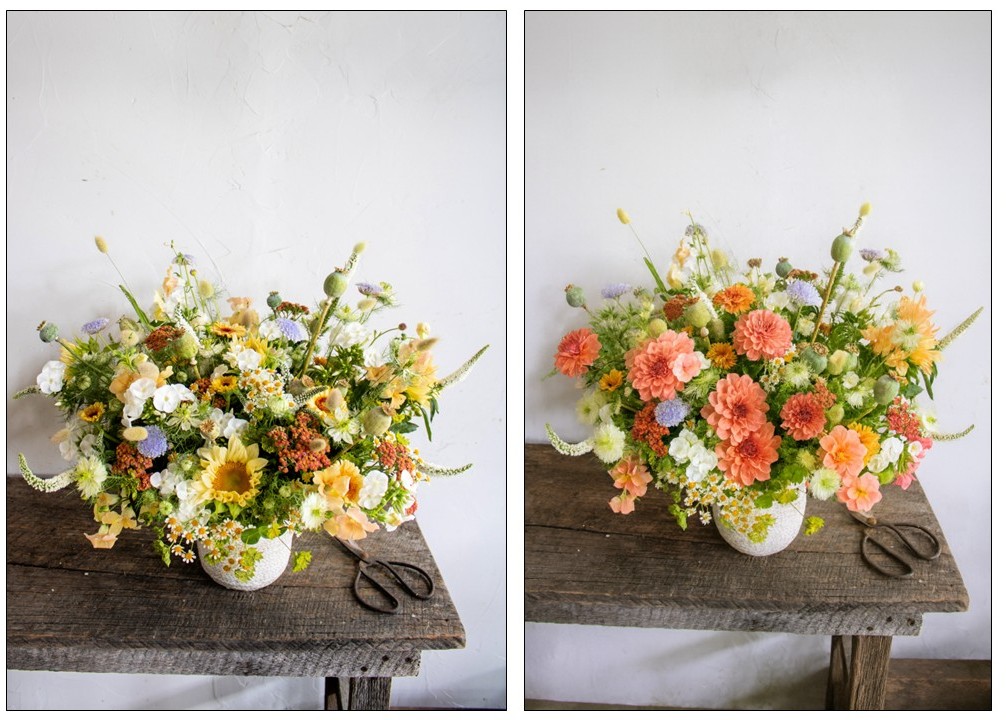
You can upload an image of your own (or the client’s) and prompt AI to replace certain flowers in the design. In the images below, the one on the left is the original and AI was prompted to “Replace sunflowers with coral dahlias while keeping the same vase, composition and natural lighting.” The image on the right is the result.
Obviously AI got a bit zealous and replaced much more than just sunflowers. BUT if you’re working with a client to educate them on how different flowers and palettes will impact their overall event aesthetic, this digital mockup certainly does the trick. The image editing here was done in ChatGPT5, by the way.
3. Brainstorm Design Descriptions & Marketing Copy
Beyond visuals, AI can help florists describe arrangements or other offerings in creative ways. Instead of struggling to write five different product descriptions for your website, you can feed AI one sample description and ask it to generate variations in different tones (romantic, modern, rustic, etc.) or with different colors or blooms.
4. Personalize Customer Communication
AI can assist with writing polished, personalized emails for wedding consultations, sympathy arrangements, or corporate accounts. You provide the key details, and AI can quickly draft a professional, customer-friendly message that you can then edit to be in your own voice. This can be particularly helpful when you’re trying to respond to a rude customer or someone with unrealistic expectations and you’re struggling to find the words to say “Bye!” that won’t get you a one-star review.
Getting Started
Really new to AI? Yeah, us too. Here are some tips for dipping your toe into this sci-fi future:
- Start small—use AI for one task (like generating a library of design descriptions you can use for event proposals) and see how it feels.
- Always review and refine AI outputs to make sure they align with your style and brand. Reword into your own voice and keep an eye out for wacky AI tangents (i.e., while asking AI for help writing this article, it kept referring to karaoke…??).
- Use specific, detailed prompts that include flower names, colors, textures, and design style.
AI won’t replace your artistry, but it can become a powerful assistant behind the scenes—helping you communicate your vision, win over clients, and free up more time to focus on what you love: designing with real flowers.
Head to this blog post to get a step-by-step guide for how to use ChatGPT to edit one of your own photos like we used it to edit the sunflower/dahlia swap above.
Double Edge Sword
It’s incredibly important to take a moment here to acknowledge how unsustainable AI is as a whole. Each time you prompt AI, it consumes massive amounts of energy and water to deliver a response or image. Click here to read more about sustainability concerns for AI.
Be judicious when using AI. Don’t use it for every little thing. Reserve this powerful tool for tasks that really aren’t within your own wheelhouse, like photo manipulation or finding the right words to respond to a bad review.