
As florists, we put enormous care into selecting high-quality blooms, conditioning them, and arranging them beautifully. One key — but often overlooked — practice as we strive to be the best is making clean cuts. Simply keeping your snips or floral knife razor-sharp pays dividends in both vase life and your own life.
Clean Cuts = Longer Vase Life
When stems are cut with dull or blunt blades, the tissue at the cut end can be crushed or pinched. That damage can collapse vascular elements (xylem vessels), making it harder for the stem to draw up water. In contrast, a sharp blade makes a clean slice that keeps those water channels wide open.
Additionally, dull blades leave ragged edges and bruised tissue that are more prone to bacterial colonization, which goes on to clog stems and shorten vase life.
Sharp Tools = Hands That Don’t Hurt
Cutting hundreds of stems every day is repetitive work, and dull tools demand more force. That extra effort to make each cut can lead to hand fatigue, soreness, and repetitive strain injuries like carpel tunnel or tendonitis over time.
In contrast, when blades are kept razor sharp and well maintained, each cut requires minimal pressure. For the least amount of strain on your hands, using a sharp floral knife is the best tool of all.
Make It A Daily Practice
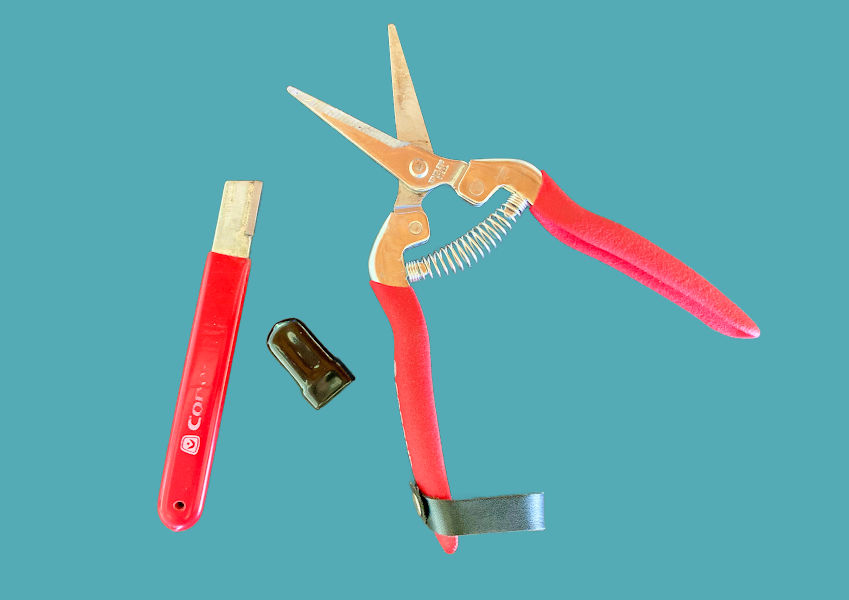
Sharpening your cutting tools should be a daily ritual. Each morning you enter your design space, take just a few moments to run a whetstone over your blades. We like this one from Corona. Here’s a short video on how to use it. By the way, we also love Corona snips and we sell those at PFG if you need a new pair.
In addition to sharpening your cutting tools every day, you should also clean and sanitize them regularly to remove any built up sap, which will also cause strain on your hands. We’re fans of Scissor Magic for this.
A sharp blade isn’t a luxury. It’s a critical part of delivering long-lasting arrangements and protecting your hands. For florists aiming to offer top vase life and sustain their own well-being, sharpening is not optional. It’s a daily practice.
For more florist resources, explore other articles on our blog here.