
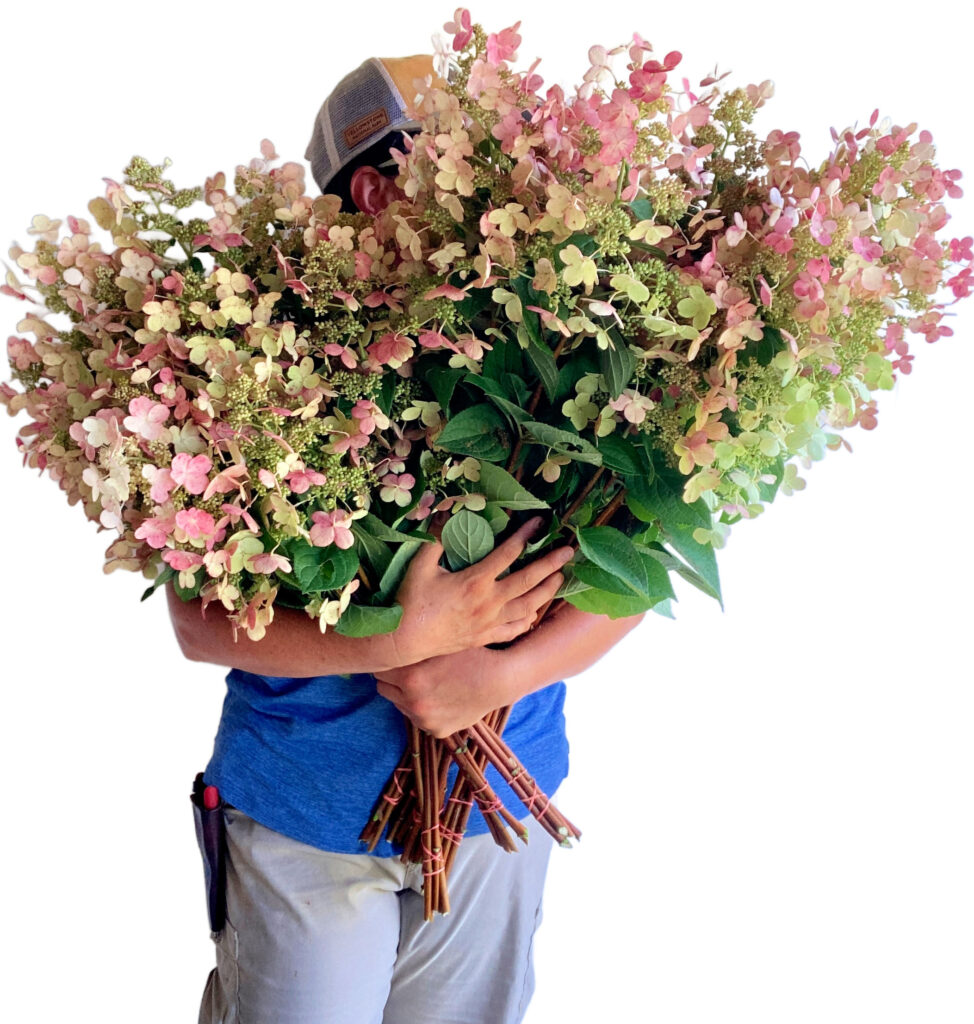
It’s peak hydrangea season here at PFG. Everyone is familiar with the classic big blue bloom, but did you know there are over 70 varieties of hydrangeas in the world? Seventy! We have this great article that goes into detail about all the varieties on offer at PFG. Check it out if you haven’t already.
For this newsletter, we’re focusing on hydrangea hydration. The name hydrangea comes from the Greek roots ‘hydor’ and ‘angos’, which translates roughly into “water vessel”. It’s a fitting name because hydrangeas are water guzzlers, sucking up quite a bit more water than most flowers. It’s not unusual for hydrangeas to suck a bucket dry in a day, particularly if they are exposed to sunlight or a warm breeze, like your shop door opening and closing on a hot day. The reason for this is that the wide and abundant petals of a hydrangea bloom are constantly respiring (sort of like our sweating), which means the stems draws up a lot of water to replace what is being lost through the petals.
Six Tricks for Happy, Hydrated Hydrangeas:
1.)When receiving your orders with hydrangeas, always make sure to process them first and get them into buckets with at least 4″ of water in the bottom, ideally even more.
2.) From the bottom of the stem, slice up the middle about three inches with a sharp knife or snips. This exposes more surface area for the stem to be able to absorb more water. Never (ever!) smash the stem with a hammer. This damages the cell structure that is so vital for drawing up water. Have a look at a botany book and you’ll see pretty quickly how smashing woody stems like hydrangea is a no-no.
3.)If the hydrangea you receive are completely flopped, fill up a sink or procona with a lot of cool fresh water. Submerge your limp hydrangeas, flower head and all, entirely under the water. Let soak for at least 30 minutes or even overnight. They should plump up and look great again as long as they hadn’t gotten crispy in their dehydrated state.
4.) If you receive hydrangeas that are just a tiny bit droopy and you want to nip their wilt in the bud, you can use a product called Quick Dip, which is a commercial hydrating solution (think Gatorade for flowers).
5.) An old florist hack that we absolutely love is the use of alum powder. Alum powder is something you can find in the spice aisle of any well-stocked grocery store since it’s used in making pickles (yep, pickles!). To use for hydrangeas, make a fresh 45 degree cut on your stem, press the cut end into the alum powder, then immediately place in the vase or bucket with plenty of clean cool water. The alum powder, which is potassium aluminum sulfate, will start a chemical reaction that opens up the vascular system of the hydrangea stem, clearing out all the clogs and enabling it to take up the maximum amount of water.
You can use alum on most any woody stems that may be having a hard time taking up enough water. Other fun facts about alum, because science is cool…alum is also used as a mordant in dyeing, a flocculant in water purification, an astringent in skincare, a component in baking powder, a styptic to stop bleeding, and a natural deodorant. Sounds like alum is magic, right?
6.) Avoid strong sunlight or air movement/wind. No amount of conditioning or water in the vase/bucket is going to keep a hydrangea perky if it’s under such stress. For this reason, always add hydrangeas at the last minute to outdoor installations and always make sure they’re water tubed. The exception being when hydrangeas are antiqued in autumn and very firm.
We have six hydrangea varieties available at the moment and they’ll continue to be available in volume through November. As we crest the peak of summer, local hydrangeas are antiquing from pure white to include shades of green and pink. This color shift will become more drastic with each passing week. They make an incredible foundation for just about any autumn design plan!